Vacuum Receivers & Filters
The Core of Every Pneumatic Conveying System
Built for performance.
Selecting the right receiver and filter combination is the first step to peak performance, and peak performance translates to huge returns – from higher quality product and less waste to faster output, longer equipment life, improved working conditions, and more.

When selecting componentry, knowing the characteristics of the material being handled is essential. Particle size, shape, how free-flowing it is, moisture content, and bulk density. Is the material fragile, lightweight, heavy, reactive, lumpy, or sticky? Does it require fine filtration? We take all of these factors into account when selecting a vacuum receiver and filter system for your application.
The Vacuum Receiver
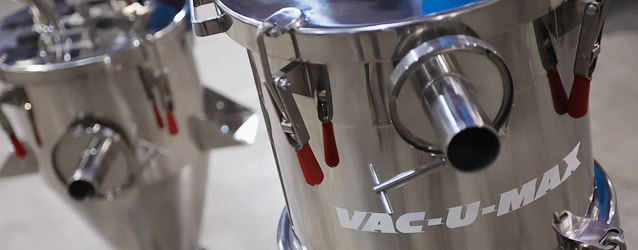
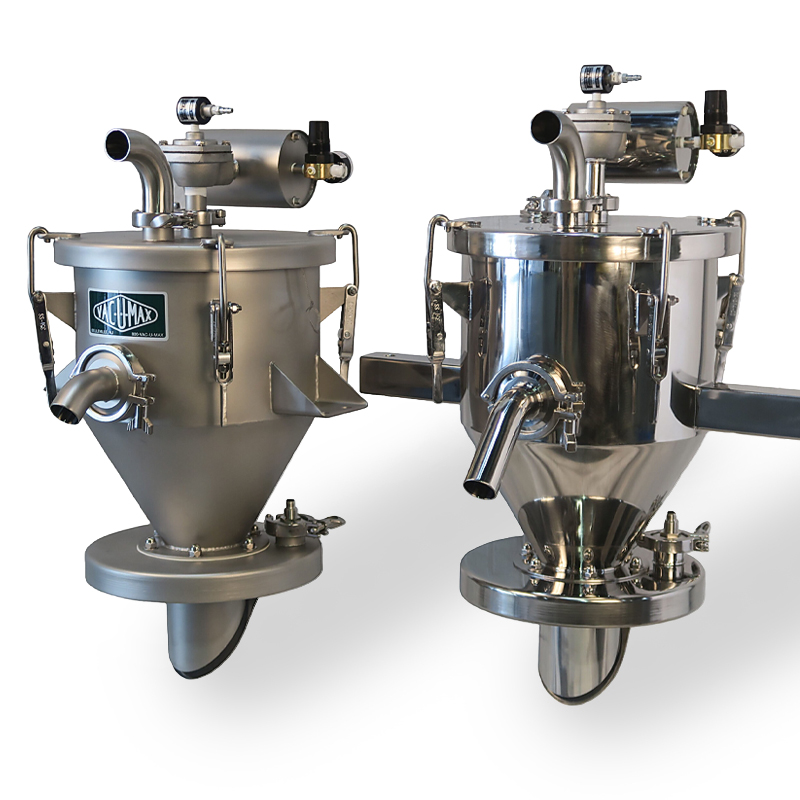
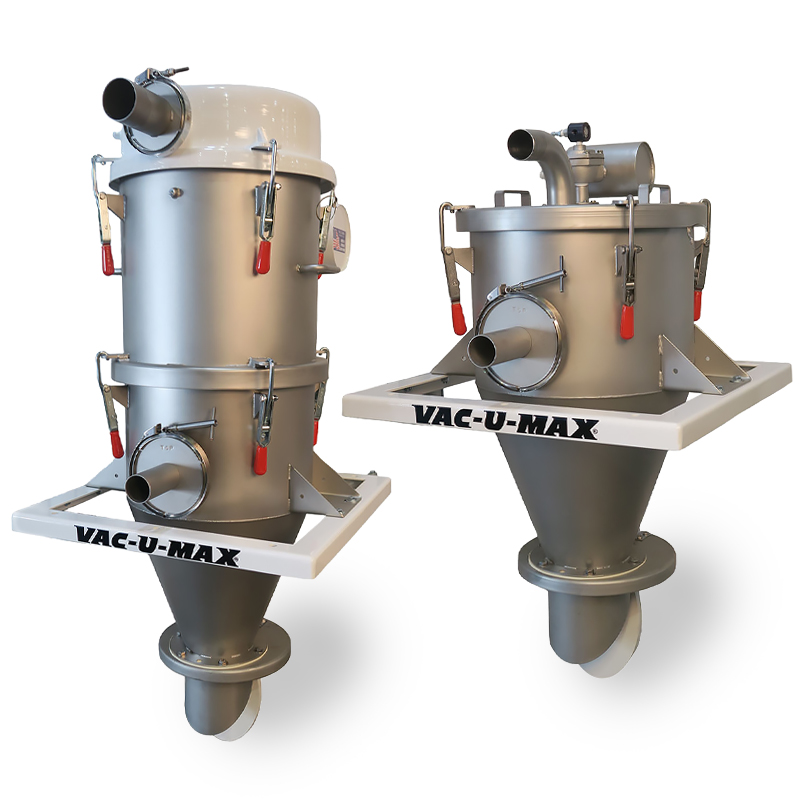
Vacuum receivers come in all different shapes and sizes. From 12″ to 60″ in diameter, 0.25 cubic feet to 500 cubic feet in capacity, vacuum receiver sizing depends on the bulk density and convey rate of the system. VAC-U-MAX offers vacuum receivers for every bulk material application, from pre-engineered models for plug-and-play convenience to fully custom-engineered solutions for highly specialized or niche applications.
There is no one-size-fits-all receiver. If anyone tries to suggest differently, walk the other way. Even our turnkey solutions come in multiple variations and will be configured, tuned, and tested to your exact specifications and materials. VAC-U-MAX receivers have three main body styles:
- Concentric Cone: Concentric cone receivers have a uniform cone shape and are used for the most basic, free-flowing, non-fragile materials.
- Offset Cone: This receiver features one straight wall and one wall with a 70-degree slope. Offset cone receivers can handle roughly 90% of all materials, including some very difficult, non-free-flowing materials.
- Tube Hopper: For the toughest cases, we have the tube hopper receiver which features a straight-sided cone. Tube hopper receivers are excellent for materials that won’t flow, materials with very light density, materials with a high moisture content, fibrous materials, and sticky materials.
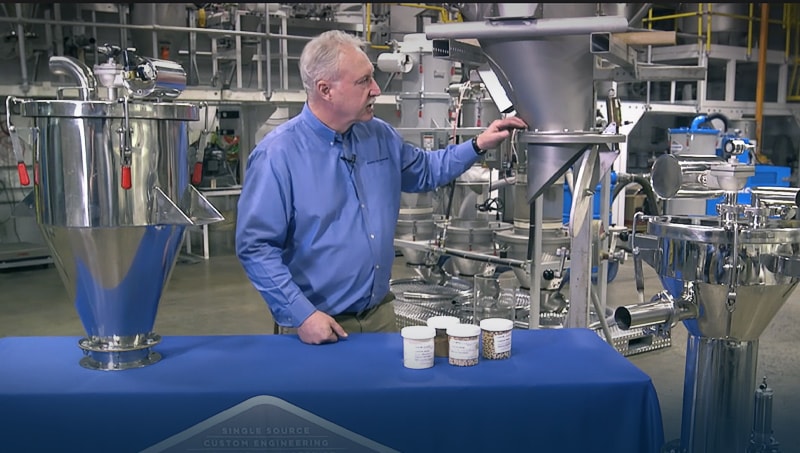
Watch the video below for a hands-on overview of vacuum receiver designs and filter types for conveying bulk materials.
Video
Filters & Filter Assemblies
Like vacuum receivers, the filters in a vacuum convey system depend on the application. VAC-U-MAX uses static conductive filters and our pulse filter cleaning system keeps the filters clean and the system running efficiently.
Choosing the correct filter is key to performance and productivity. Vacuum receiver filters are the lungs of a pneumatic conveying system, and without good lung capacity, you won’t convey any material. A bad filter can zap the power of a system, even with the most powerful vacuum pump. Choosing the wrong type of filter can lead to downtime and wasted hours spent on cleaning. VAC-U-MAX offers static-conductive vacuum receiver filters for every application:
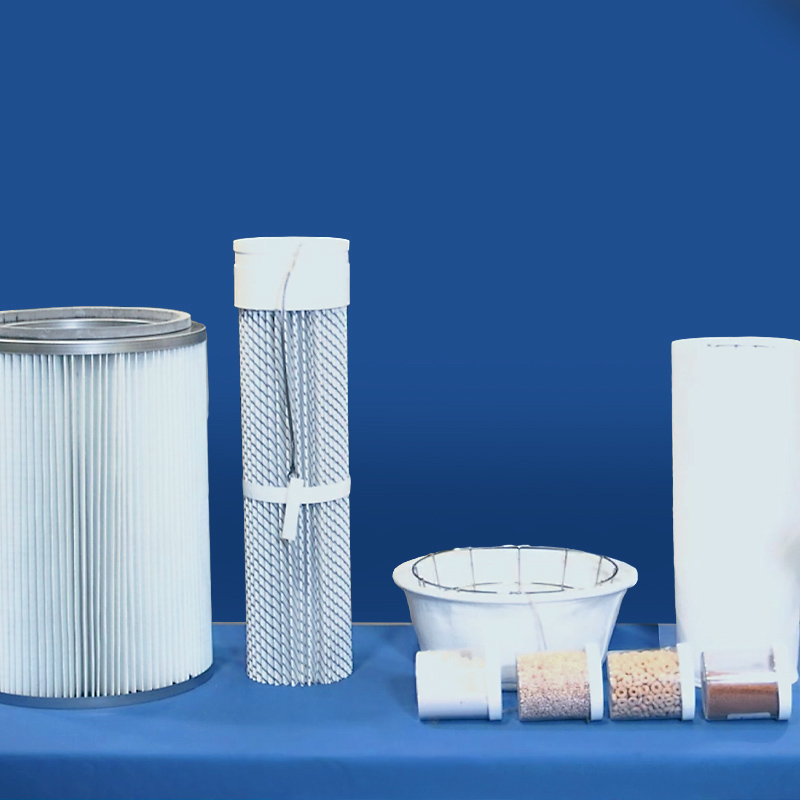
- Sock type filter: Sock filters feature a smooth, easy-to-clean surface with a metal cage inside for support. Generally there will be 5-7 of these in a multifilter assembly.
- Unifilter: Also supported by a metal cage, unifilters are generally used for less dusty materials or for lower rate systems.
- Pleated bag filter: Pleated bag filters are the same size as the sock type, but they have 5-7x more filter area. Like the sock filter, pleated filters are often found in multifilter assemblies.
- Cartridge filter: Cartridge filters great for high dust applications. They are fully open (not enclosed in metal) so they can easily release powder when pulsed.
- Filterless receivers: Not all vacuum receivers have a filter. For example, our Gel Cap & Capsule Conveying System features a sanitary filterless vacuum receiver.
Meet our solutions: Vacuum Receivers & Filters for Pneumatic Conveying
Pre-Engineered Vacuum Receivers
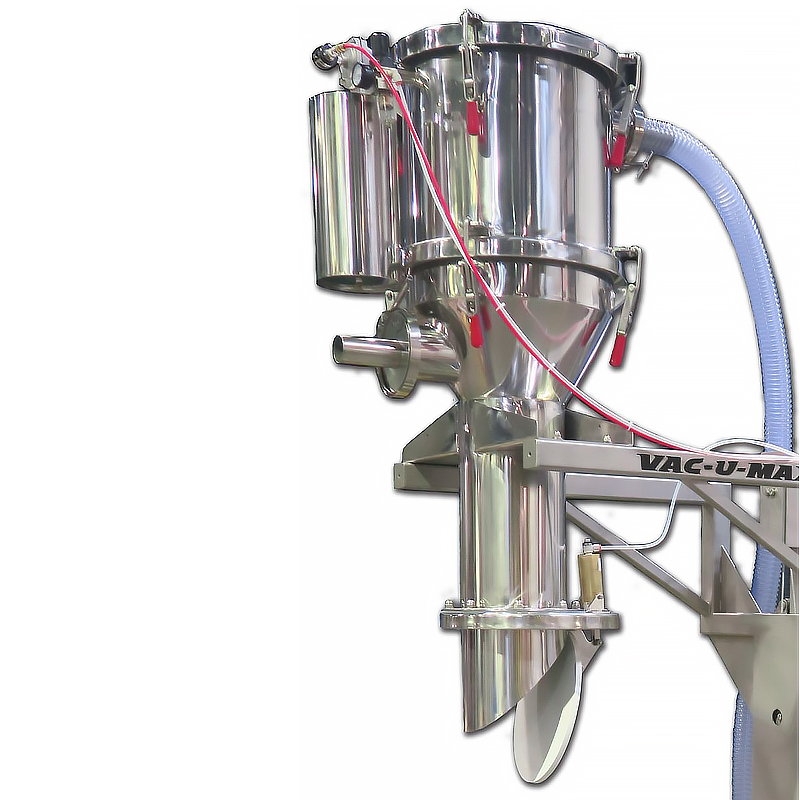
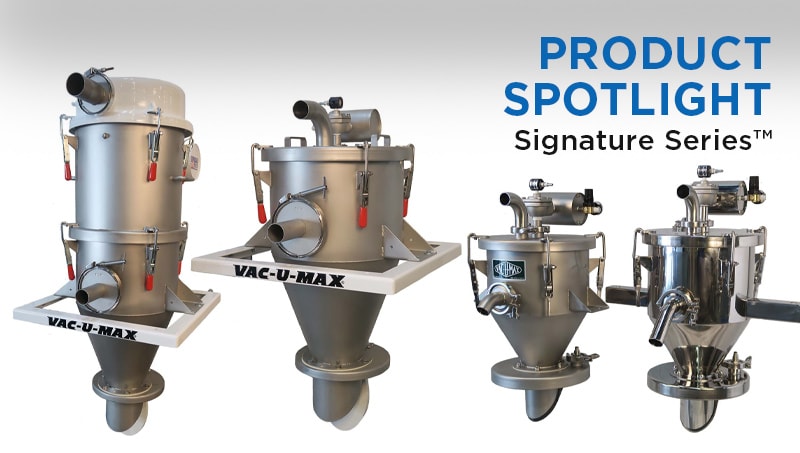
Our Signature Series™ pre-engineered vacuum receivers are part of the full Signature Series™ line of pneumatic conveying packages—a family of easy-to-integrate packaged vacuum conveying systems for powder and bulk solid transfer
Each Signature Series system includes five core components: a vacuum receiver, pickup nozzle, tubing, vacuum producer, and UL-listed controls. These modular, flexible systems are ideal for both free- and non-free-flowing powders and granular bulk materials and are excellent for packaging equipment, refills, loss-in-weight feeders, OEM applications, and more.
Watch the video below for a hands-on introduction to the VAC-U-MAX Signature Series™ product line.
Video
Application Success Stories