

Additive Manufacturing Operation Automates Metal Sieving Process, Reducing Time by 85%
Case Study
Metal recovery vacuum conveying system eliminates hazards, preserves expensive metal powders, and speeds process.
With 30 years experience in product development and engineering solutions in the injection molding and mold making industries, Tom Houle, director of Lumex NA for Matsuura USA, is passionate about manufacturing solutions, operational excellence, and continuous improvement.

This year, one of his focuses was to improve the work environment by automating metal powder recovery at the Matsuura Machinery USA Lumex Additive Manufacturing Center, a laboratory and demonstration facility inside Matsuura USA’s headquarters in St. Paul, Minnesota, where the company showcases its hybrid manufacturing technology, performs tests, and produces billable parts on a one-off basis.
Beyond automating the metal recovery process at the demonstration facility, an equally important goal was the ability for Matsuura to provide its customers with a proven turnkey metal recovery system as auxiliary equipment for its LUMEX series of hybrid 3D printers.
Hybrid Manufacturing
The hybrid manufacturing technology combines advanced manufacturing techniques of selective laser metal sintering (SLS) with precision high-speed machining (HSM) to produce a finished part that doesn’t require post-machining. This unique hybrid manufacturing machine supports the engineering and manufacture of highly complex integrated parts and molds in shapes and configurations that were once impossible using traditional milling methods.
During the unique hybrid manufacturing process, a thin layer of metal powder is distributed across the entire build platform, and laser fused or sintered, to create the geometry of the part, leaving most of the powder outside the geometry available for reuse.
Product Loss
During the additive process, some tiny metal powder molecules outside of the build geometry also become fused; and, during the subtraction process of milling, minuscule metal chips deposit within the unused metal powder, both needing removal before reuse. This minuscule debris still looks like a powder; however, in comparison to the finer powder, it is quite large.
With such an advanced manufacturing process that allows parts makers to reduce cycle times up to 45 percent, manually sieving the metal powder for reuse seemed counterintuitive to Houle.
Manual sieving “is a messy, tedious, and time-consuming job,” says Houle. “it was a bit like panning for gold, taking multiple hours to sieve just 10kg of material. Our machines use 160kg of material, so the process was daunting.”
Choosing a Partner
In his effort to fully automate the sieving process, Houle evaluated six different suppliers of sieving equipment measuring willingness and ability to engineer a solution, ease of design process, breadth of offerings, price, and delivery.
“Since additive manufacturing is a relatively young industry,” Houle says, “few of the suppliers had experience working within sophisticated and regulated industries. Most had only worked with more traditional powders and processes.”
From the six suppliers, Houle says he selected VAC-U-MAX, because “their experience with conveying all types of media, and specific focus on metal recovery, allowed them to quickly understand our needs.”
Celebrating 65 years in business, Belleville, New Jersey-based VAC-U-MAX, a pioneer in vacuum pneumatic conveying, specializes in the design and manufacture of pneumatic systems and support equipment for the conveying, weighing, and batching of dry materials. With proven pre-engineered conveying solutions and industry expertise with over 10,000 powders, the company regularly designs custom solutions for manufacturers.
Engineering a Solution
Metal powders used in additive manufacturing are fine, heavy, dusty, and sometimes reactive, requiring specialized knowledge of material characteristics; however, Doan Pendleton, President at VAC-U-MAX says “metal recovery systems are fairly simple systems to us. It was a little more complicated with Matsuura because they wanted to weigh small amounts of the recovered powder into smaller containers for inventory control purposes and ergonomics and that required a little more engineering.”
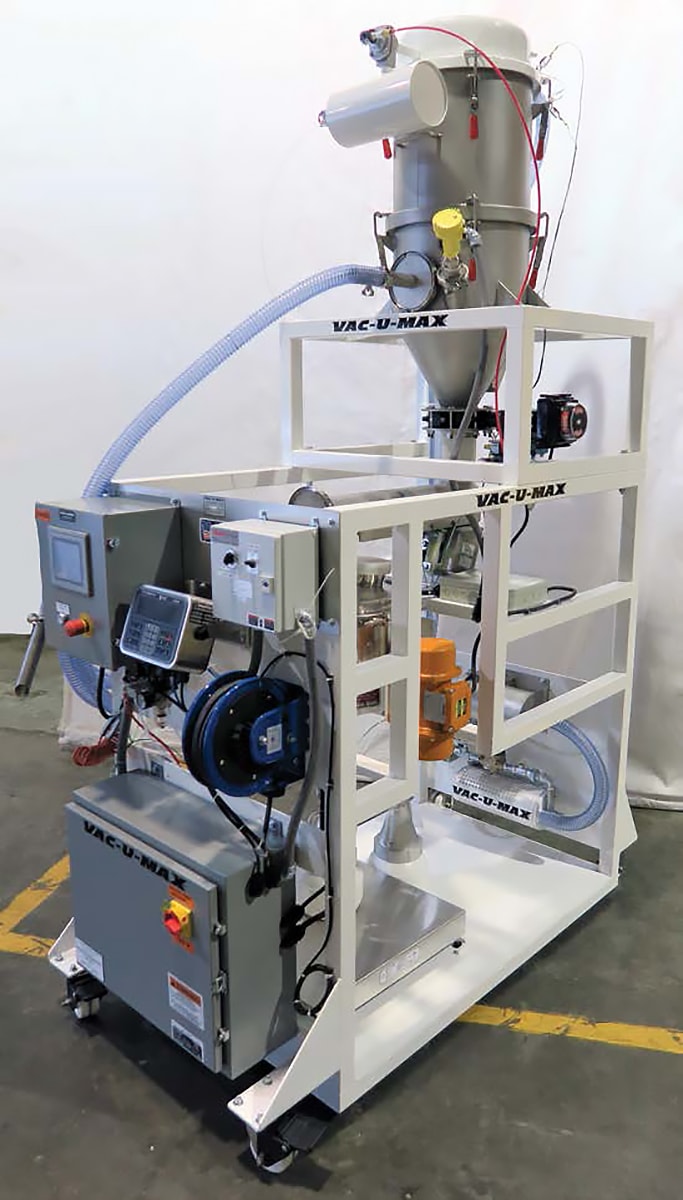
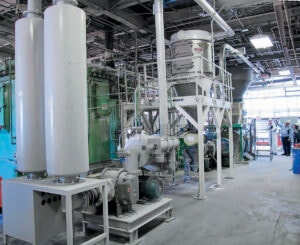
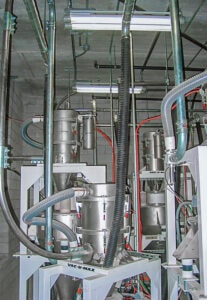
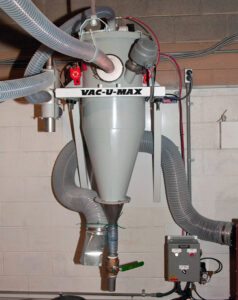
Metal recovery systems use vacuum to extract powder directly from 3D printers, from dryer trays, or other containers, convey it to a vacuum receiver which discharges powder into a sieve, which then discharges good powder into a pail, drum or other intermediate bulk container for reuse—all within an inert environment.
VAC-U-MAX has four levels of plug-and-play metal recovery systems, all of which have standard inert gas purging capabilities for use when needed. Gas purging minimizes moisture and keeps reactive materials inert by limiting the oxygen concentration surrounding the powders as described by NFPA 69 and NFPA 484. Additionally, the vacuum conveyor equipment is static bonded and grounded, bolstering system safety by knocking out any static charge that may build up from the vacuum conveying process.
In metal recovery systems, the sieve is the heart of the system. VAC-U-MAX standardly uses 63-micron screens for metal powder recovery which translates to 230 mesh, having 230 holes per linear inch.
With mesh that fine, the use of ultrasonics eliminates the risk of blinding the sieve and yields higher powder processing speeds.
Ultrasonics excite the wires in the screen, helping to distribute the material across the full diameter of the screen and pass the good material through screen. Without ultrasonics material builds up in the center of the screen, slowing the screening process.
According to Houle, VAC-U-MAX “adjusted and controlled the ultrasonics and selected the screen size to match our process, our powders and the speed at which we were conveying powder,” he says. “What used to take an hour and a half, and require two operators, now only takes four minutes and one operator.”
Ticking every box: Efficient, effective, self-contained, and fully mobile.
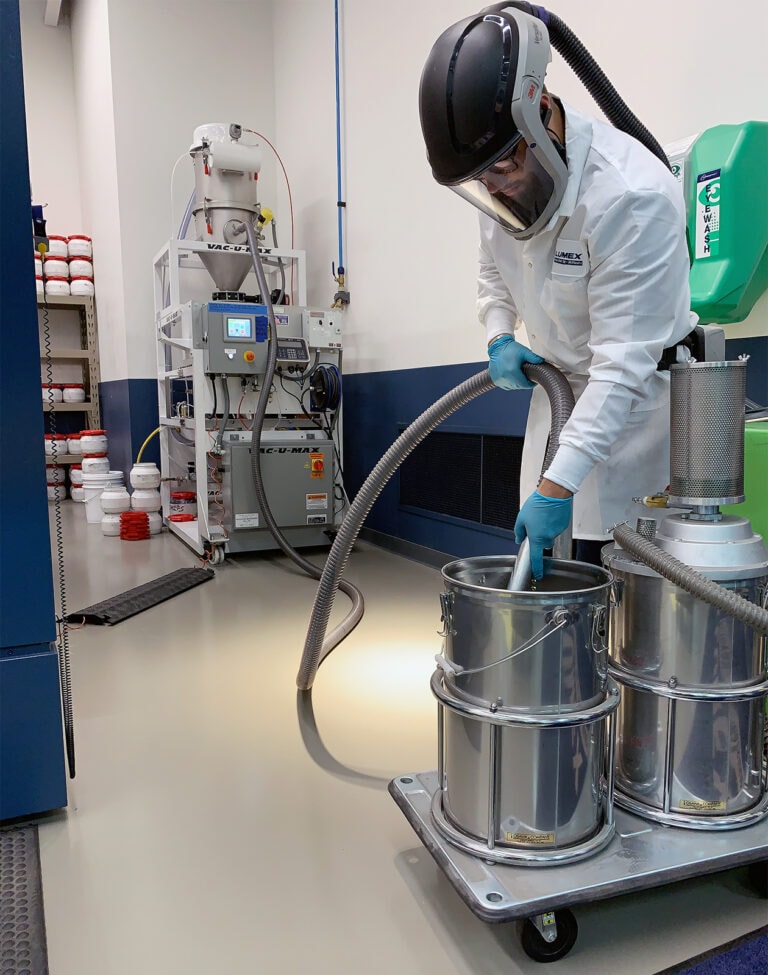
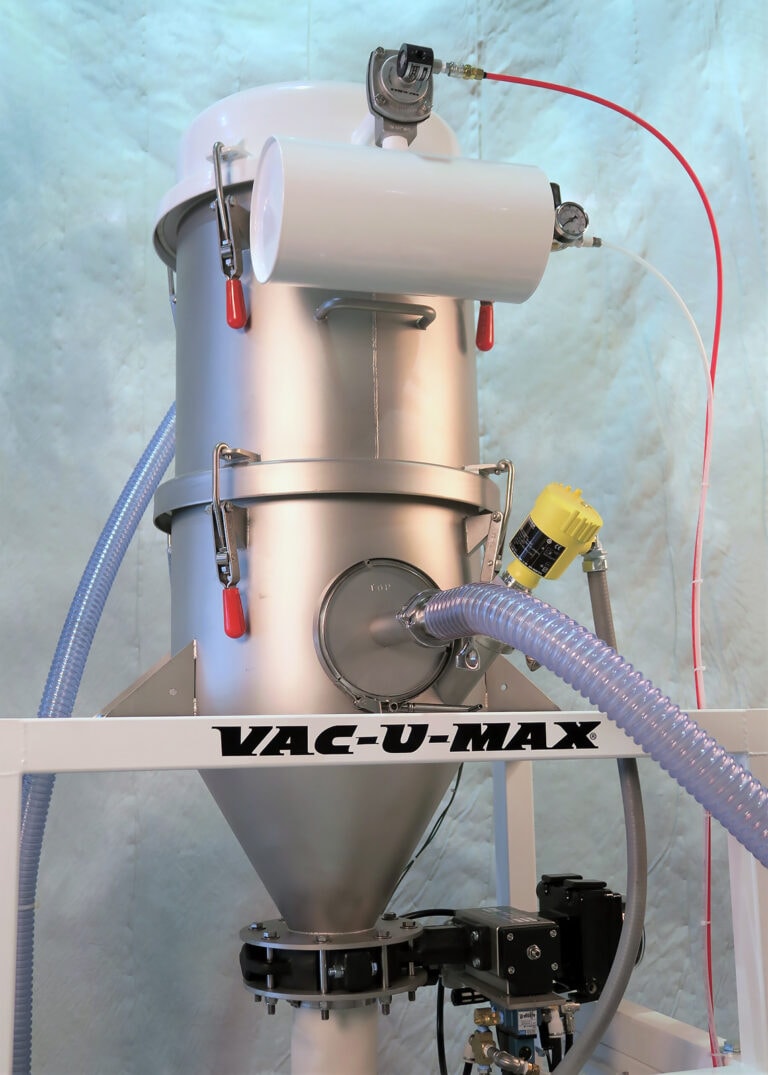
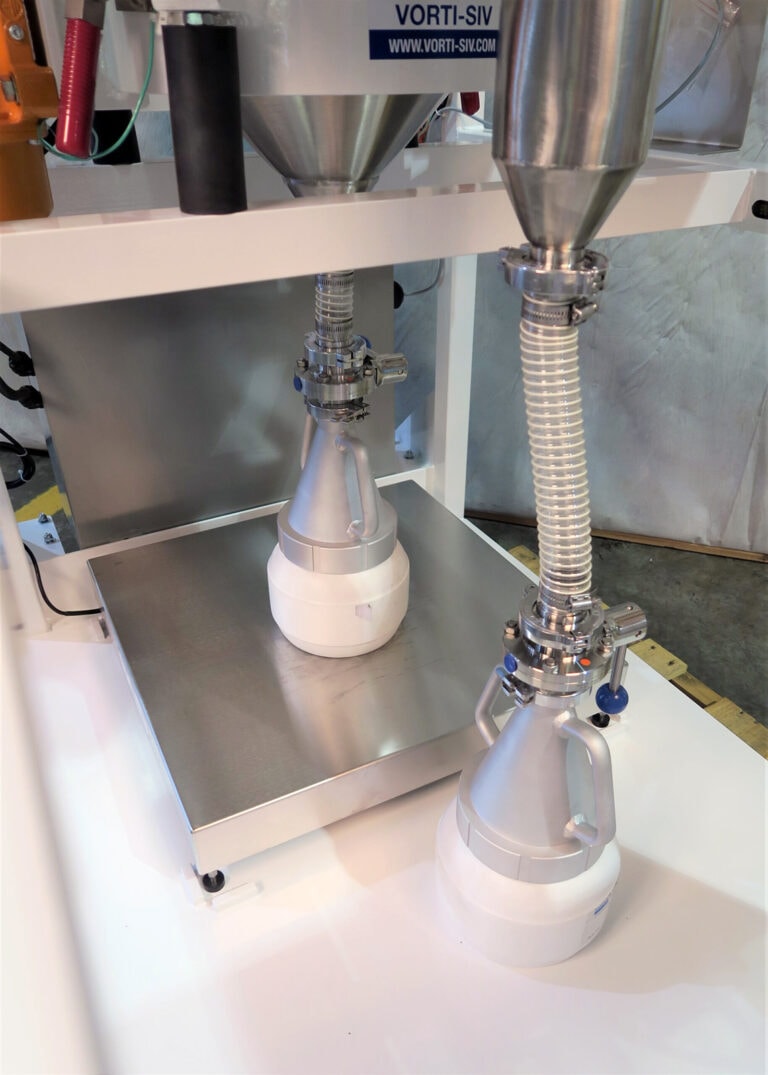
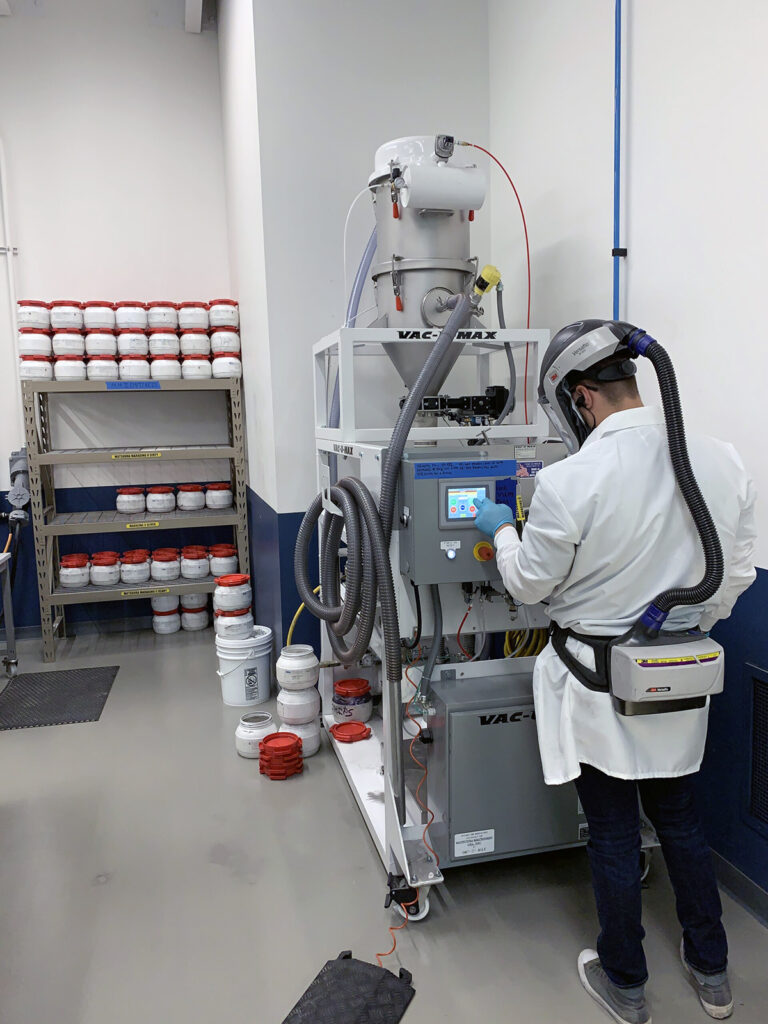
In addition to engineering conveying system components to match Matsuura’s powders, VAC-U-MAX worked with the hybrid machine manufacturer so it could reuse the original containers used to load media back into the hybrid AM printer.
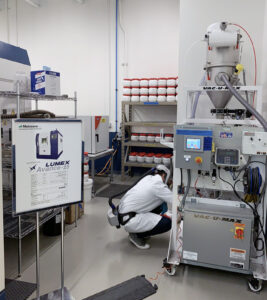
The containers hold approximately 22 pounds of material making them manageable for workers to manipulate during the loading process, minimizing ergonomic hazards. Reusing the containers also allowed the hybrid manufacturer to reseal them with desiccant packs, reducing the frequency of drying cycles needed for hygroscopic metal powders that will absorb moisture from ambient air.
Maximizing sieve throughput and screen lifespan requires a metered feed of material into the sieve. Therefore, VAC-U-MAX implemented a level control that senses when the vacuum receiver is full. The system then stops the conveying cycle, opens a discharge valve that feeds into a vibratory tube which then meters the amount of powder discharged onto the screen deck. The reusable powder is collected in a dedicated pail and the sieved (i.e. waste) powder is directed into a separate vessel. The reusable powder sits on a floor scale that ties into the metal powder recovery system’s control panel.
The touch screen control panel allows operators to manage everything from one place and operate major components separately when necessary, such as turning the sieve on and off, operating the sieve independently from the conveying system and pulsing the filters for cleaning.
Solution Highlights
- Powered by compressed air or inert gas, the system created for Matsuura USA has the suction power to convey metal powders from storage containers 15 feet away for sieving and weighing before re-use.
- The system removes reactive and non-reactive metal powders from build boxes quickly (8Kg/min).
- The on-board sieve and scale separates and weighs reusable powders into an industry-standard pail (left) while oversize/waste debris is collected separately (right).
- The system includes a user-friendly HMI control panel with a program for continuous conveying, sieving, and weighing of reactive and non-reactive metal powders. (Also suitable for ceramic and polymer powders.)
- The MPRS is fully mobile, enabling it to support multi-printer facilities.
- The self-contained system includes UL-certified controls and a grounding interlock system, protecting users and their facilities.
Houle says, “the VAC-U-MAX system is a great auxiliary component to additive manufacturing. Because we are more efficiently removing impurities from the combined laser and milling process, we are able to reuse a higher percentage of our powder.”
“We contracted with VAC-U-MAX to provide a turnkey, fully automated, sieving system for use with our metal hybrid printer, and it works perfectly,” says Houle. “Any time we can provide a turnkey system with all of the necessary auxiliary equipment to our customers, it is of great benefit.”
Image gallery
VAC-U-MAX Pneumatic Conveying System Allows No Margin for Error
Case Study
Vacuum conveying system engineered to operate flawlessly 24/7 in Israel’s harsh corrosive Dead Sea environment.
When Dead Sea Works Ltd, (DSW), one of the world’s largest producer and supplier of potash products, decided to expand its Dead Sea facility product line to include potassium chloride suitable for food and pharmaceutical applications, Project Manager, Vlad Golick, was tasked with developing a proper area to package the pharmaceutical product into 55 lb and 2000 lb super sacks, and also a material handling system to transfer the product to the packaging equipment.

Because the plant operates 24/7 there is no margin for error and Golick had to ensure that the equipment could withstand constant operation in the harsh desert environment, was user friendly, and interact flawlessly with the hydroscopic nature of the product. The solution was a semi-custom engineered vacuum conveying system.
Prior to completing the project the product was manually bagged into 55 pound bags in an environment, which did not completely meet strict GMP requirements
“To accommodate the new product, a sanitary room was constructed 30 feet from the old packaging area and we required a conveying system that could move the product horizontally 30 feet and 14 feet vertically,” says Golick.
Golick and his team investigated several material handling solutions, including belt conveyors and bucket elevators, to move the material but those methods exposed the product to the environment and were problematic for moving material vertically. Pneumatic conveying seemed like the right choice, but because potassium chloride is highly hydroscopic and tends to clump Golick was concerned that ambient air would come into contact with material during the conveying cycle and cause the product to solidify.
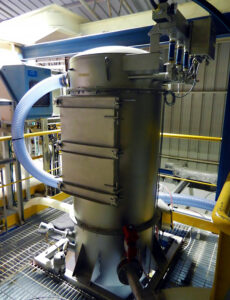
In very simple terms, pneumatic conveying is the method of using air to move bulk dry product from place to place within a factory. There are two types of pneumatic conveying, vacuum and pressure. Vacuum is where the system is sucking the material through the tube and pressure is where material is blown through the tube.
While ambient air does come into contact with the product when pneumatically conveying materials, conveyor experts know how to minimize the effects so that it does not affect materials.
“We contacted suppliers in Europe, and VAC-U-MAX in the U.S. Its systems are well known in Israel, and the company had the technical expertise we were looking for,” says Golick.
Belleville, New Jersey-based VAC-U-MAX, an expert in the design and manufacture of pneumatic systems and support equipment for conveying, batching, and weighing of dry materials, couples its proven pre-engineered conveying solutions with industry expertise to design custom solutions for processors.
Recognizing that materials behave differently under various conditions, the conveyor manufacturer has a long-standing practice of offering no obligation test runs of customers’ materials in their testing facility, and DSW sent samples of its product for test with the equipment.
Before running any tests, the conveyor manufacturer had to first consider the unique location and environment of the application and design the system using high temperature materials and also materials that are corrosion resistant—which is a whole subject in itself. It was decided that a conveying system built from 316L stainless steel could withstand the harsh desert temperatures and corrosive atmosphere at the Dead Sea.
With the equipment material decided, VAC-U-MAX tested the hydroscopic material to ensure it would not absorb moisture and clump in the conveying tube and packaging equipment. To prevent this, the conveyor manufacturer tested and employed flow promotion devices such as aeration, agitation or vibration to keep the material moving with a transport weight of 5.5 tons per hour.
Beyond environmental factors, Golick says, “the equipment needed to be user friendly so that different language groups can operate it.” The national language of Israel is Hebrew and Arabic, and English and Russian are the most popular unofficial languages in Israel. Therefore, the system is fully automated to run 24/7 with 30 operators rotating off with no operator attention required except to push a start button.
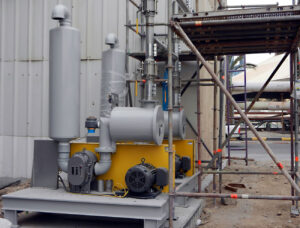
After running extensive tests in its facility to ensure the system performed according to DSW specifications, a team from DSW visited the VAC-U-MAX test facility to witness the equipment in action. Golick says, “we saw that the system could do its job and we issued a purchase order. The cost difference and technical assistance is where VAC-U-MAX had an advantage.”
For the installation, a VAC-U-MAX team traveled to the Dead Sea facility. “The team worked crazy hours and didn’t mind,” says Golick. “We had more assistance than we expected from them.”
“The two systems have been up and running since the beginning of the year and they are working without any problems so far,” says Golick.
VAC-U-MAX offers a wide range of standard pneumatic conveyor systems, weighing systems and accessories, plus semi-custom systems, as well as totally custom-engineered systems. They offer factory testing of trial materials, as well as installation assistance and full maintenance documentation. They are the provider of choice of many well-known companies in the food, drug, and industrial manufacturing sectors.
Image gallery
Plastics Processors: 10 Things to Know When Specifying Vacuum Conveying Systems for Powders
Tech Article
The main priority is to maximize movement of powders while minimizing dust exposure.
To properly design a vacuum conveying system, you must define the upstream process that is supplying the material. Vacuum conveying systems for powders and other bulk materials involve a starting point and a destination, avoiding many hazards along the way. Powders are transferred from various sources to the processing line using vacuum or negative pressure. The number one advantage of vacuum conveying is dust control, and in the plastics industry, combustible dust is a safety issue.

Vacuum conveying controls dusts by eliminating hand scooping, delivering powders in an enclosed process without fugitive dust. If leaks occur, the leak is inward, unlike positive-pressure systems, which leak outward. Vacuum conveying is preferred by NFPA over positive-pressure conveying. In dilute-phase vacuum conveying, material is entrained within the air stream, with a complementary ratio of air and product.
System controls allow material to convey and discharge on demand, ideal for larger applications requiring movement of bulk materials from larger containers such as bulk bags, totes, railcars, and silos without a lot of manual intervention, reducing frequent container changes.
Typical conveying rates in dilute phase may go up to 25,000 lb/hr, with typical conveying distances of less than 300 ft and line sizes of up to 6-in. diam. For smaller “up-and-in” conveying applications with conveying rates of less than 0.25 ft³/min, conveying line sizes start at 1.25 in. diameter.
To properly design a pneumatic conveying system, it is important to define the following 10 key criteria in your process:
1. KNOW YOUR BULK DENSITY

As a first step, it is important to know more about the powder that is being conveyed, specifically its bulk density. This is typically described in pounds per cubic feet (PCF) or grams per cubic centimeter (g/cc). This is a key factor in calculating the size of the vacuum receiver. For example, lighter-weight powders need larger receivers in order for the material to fall out of the air stream.
Bulk density of the material is also a factor in calculating the size of the conveying line, which in turn determines the vacuum producer and conveying velocity. Higher-bulk-density materials require faster transport velocity.
2. KNOW YOUR CONVEYING DISTANCE
Conveying distances comprise both horizontal and vertical factors. A typical “up-and-in” system offers a vertical lift from floor-level, conveying up to a receiver over an extruder or loss-in-weight feeder. It is important to know the number of 45° or 90° sweep elbows. “Sweep,” in general, refers to a large centerline radius that is typically 8-10 times the diameter of the tube itself.
It is important to keep in mind that one sweep elbow is equivalent to 20 ft of linear tubing. For example, 20 ft vertically plus 20 ft horizontally and two 90° elbows equals at least 80 ft of conveying distance. Reducing the number of elbows in your system should be an important goal.
Powders do not flow like liquids, and vacuum conveying systems should minimize the number of back-to-back elbows. If vertical vacuum conveying runs exceed 12-15 ft in batch mode, the material in that line will stop conveying and fall back down. For this scenario, it is important to design a “line-clearing valve” to make sure that the vertical leg is clear before the batch process stops.
3. KNOW YOUR CONVEYING RATE
When calculating conveying rates, it is important to know how many pounds or kilograms per hour will be conveyed. Additionally, define whether the process is batch or continuous.
For example, if a process requires conveying 2000 lb/hr of product, but the batch process requires conveying 2000 lb every 5 min for 1 hr, this really amounts to 24,000 lb/hr. This is the difference between 2000 lb in 5 min vs. 2000 lb over a 60-min period. It is important to know the demands of the process in order to properly size the system to determine the conveying rate.
4. KNOW YOUR BULK MATERIALS CHARACTERISTICS

In the plastics industry, there are many different bulk material characteristics, particle shapes, and sizes. Powders can be fine, cohesive, or floodable. Other characteristics include pastilles, pellets, flakes, granules, and so on. Understanding particle size and size distribution is very important when sizing the receiver and filter assembly, for either mass-flow or funnel-flow distribution.
Other considerations include defining whether the material is free-flowing, abrasive, or combustible; whether it absorbs moisture; and whether there potentially could be chemical compatibility issues with conveying hoses, gaskets, filters, or process equipment.
Additional characteristics include materials that are “smoky” like talcum powder, which has a high fines content, requiring more filter area. For non-free-flowing materials with a high angle of repose, special considerations need to be given to the receiver design and discharge valve. Understanding particle size and size distribution is very important when sizing the receiver and filter assembly.
5. KNOW HOW YOU RECEIVE THE RAW MATERIALS
When designing a vacuum-conveying system, it is important to clearly define how the materials are received and introduced to the process. There are many ways of introducing materials into a vacuum-conveying system; some are more manual, while others are more suitable to automation—and all require attention to control dust.
Material can be received in paper bags, fiber drums, barrels, bulk bags, super sacks, rigid intermediate containers, silos, day bins, railcars, bulk trucks, or upstream process equipment. To maximize dust control, bulk-bag unloaders incorporate enclosed vacuum-conveying lines, and bag-dump stations integrate dust collectors. Material is conveyed from these sources by filter receivers and then conveyed to the process.
6. KNOW YOUR UPSTREAM PROCESS

To properly design a vacuum conveying system, you must define the upstream process that is supplying the material. Find out if the material is coming from a loss-in-weight feeder, volumetric feeder, mixer, reactor, extruder hopper, or any other equipment used to move material. These all influence the conveying process.
Additionally, the frequency of material coming out of these vessels, whether batch or continuous, affects the conveying process and how the material will behave when it comes out of the process. Upstream equipment affects downstream equipment. It is important to know everything about the source.
7. KNOW YOUR HEADROOM REQUIREMENTS
This is an important consideration when installing equipment in an existing plant. What may have been designed for manual operation may not offer enough room for an automated process. Even the smallest conveying system for powder handling will require at least 30 inches of headroom over your process, taking into consideration maintenance requirements for filter access, discharge-valve inspection, and access to equipment below the conveyor.
Applications requiring high throughput rates, which require large headroom, can use a filterless vacuum receiver. This approach allows some carryover dust to pass through the receiver, which is collected in another ground-level filtered vessel. Scaling valves or positive-pressure systems may also be a consideration for headroom requirements.
8. IS YOUR PROCESS BATCH OR CONTINUOUS?
It is important to define the type of operation that you are feeding: batch or continuous. For example, small conveyors discharging into a surge bin is a batch process. Know whether a batch of material will be received in the process via a feeder or an intermediate hopper, and whether your conveying process can handle the surge of material from a batch.
Alternatively, vacuum receivers may use feeders or rotary valves to meter the material directly into the process—that’s continuous conveying. Or, material can be conveyed into the receiver and discharged at the end of the conveying cycle in a metered way. Extrusion applications typically utilize both batch and continuous operation, feeding materials directly into the mouth of the extruder.
9. KNOW YOUR GEOGRAPHIC OR ATMOSPHERIC CONDITIONS
Geographic and atmospheric considerations are important design considerations, particularly where altitude plays an important part in sizing the system. The higher the altitude, the more air is required to convey the material. Additionally, consider plant environmental conditions and temperature/humidity control. Certain powders that are hygroscopic can have discharge problems on humid days.
10. KNOW THE MATERIALS OF CONSTRUCTION
Materials of construction are a very important consideration in the design and functionality of a vacuum conveying system. The focus is on product-contact surfaces, which are typically all metallic—plastics are not used for reasons of static control and contamination. Will your process materials be contacting coated carbon steel, stainless steel, or aluminum?
Carbon steel is available with various coatings, but those coatings can deteriorate or degrade in use. For food- and medical-grade plastics processing, 304 or 316L stainless steel is the choice—no need for coatings—with a specified level of polish for ease of cleaning and avoiding contamination. Maintenance and quality-control personnel care deeply about their equipment’s materials of construction.
About the Author

David Kennedy is Business Development Manager at VAC-U-MAX, Belleville, N.J., which designs and manufactures vacuum conveying systems for powders and bulk materials. His career at VAC-U-MAX spans 23 years.
Kennedy has an extraordinary depth of knowledge when it comes to bulk material handling. and he provides process, plant safety, and OSHA regulation experience to the global plastics, chemical, and petrochemical industries; food, nutraceutical, pharmaceutical industries; and beyond.
Image gallery
Dual Purpose Vacuum Conveyor Triples Production Throughput
Case Study
A Vacuum Conveying System Reduces a Pool Coating Company’s Lead Times & Makes Blender Loading & Unloading a Breeze
A little over a year ago Mike Monti, Business and Operations Manager at Warminster, Pennsylvania-based ecoFINISH™ also wore the hat of product blender, manually loading 160 pounds of raw polymer powder into a 55-gallon rotary drum mixer to blend color recipes for the company’s unique thermal spray coating, aquaBRIGHT™. The coating for swimming pools and spas resists chipping, peeling and scratching.

The company manufactures both the materials and equipment used to apply the fast-curing, durable eco-friendly thermoplastic coating to fiberglass, aluminum, and existing masonry finishes.
Manual Loading: Time & Labor Intensive
Scooping 5 pounds at a time, “32 back-breaking scoops,” says Monti, was time intensive and created dust which each scoop. When nearing the bottom of the drum, the reach inside the drum to retrieve the remaining product required long arms and standing on his toes.
After the product was blended the process began again, scooping blended product into 40-pound boxes, which didn’t create the same amount of dust as loading but still required body contortions to get the last bit of material from the bottom of the drum.
“We knew at some point we needed to mix in larger batches because of our rapid growth. To stay ahead of our orders we wanted a large-scale blender but then we had to come up with a way to load it,” says Monti. “There was no way to get six 160-pound barrels dumped into a blender 6 or 7 feet up, it had to be done automatically.”
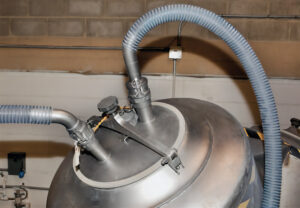
After several years of building a strong industry presence and global distribution channels, it was time to invest in a blender and bulk materials handling equipment. Monti began researching vacuum loading systems when he came across Belleville, NJ-based, VAC-U-MAX.
Specializing in the design and manufacture of pneumatic systems and support equipment for the conveying, weighing, and batching of dry materials, VAC-U-MAX has a unique adaptation of vacuum transfer called “direct charge blender loading”, designed specifically for the direct charge loading of blenders, mixers, reactors and any vessel capable of withstanding a vacuum.
With a facility’s blender or mixer as the primary receiver, the conveyor manufacturer configures systems specific to each application, providing the power source, filters, controls and blender covers with product inlet and vacuum outlet.
Automated system increases production, reduces dust.
In addition to loading the blender, ecoFINISH™ also needed a way to get the blended product from the blender and into packages within a specific budget. Rather than purchasing two vacuum conveying systems, the conveyor manufacturer suggested a dual-purpose system that uses the same conveyor system to load and unload the blender.
“From what I understand, our application—the dual purpose system—is not typical in the industry but was similar to something they did somewhere else. The knowledge they gained from the other project allowed them to apply it to our situation and their expertise saved us quite a bit of money.”
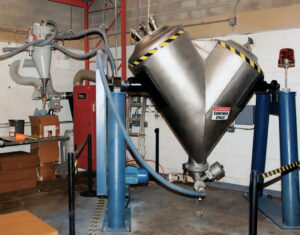
Power options for blender loading vacuum conveyors include vacuum pump packages from 3hp and higher as well as the company’s exclusive venturi power unit available in single to quadruple venturi versions. Direct charge blender loading systems standardly convey up to 7000 pounds per hour and when they exceed that rate, systems are equipped with increased levels of automation.
The system designed for ecoFINISH™ uses a 3hp pump and is configured to convey 3000 pounds an hour. “The equipment is somewhat custom,” says Monti, and was “very easy to use from the beginning. The equipment arrived with drawings and flow charts and was an easy install. The few technical questions we did have were able to be answered over the phone.”
Before purchasing the equipment, ecoFINISH™ sent samples of its materials to the conveyor manufacturer to test, free of charge, The fully functional state-of-the-art 6,000-square foot test and demonstration facility is equipped to conduct a plethora of vacuum conveying trials to simulate the actual conditions at a customer’s site.
Using standard equipment , the conveyor manufacturer configures systems specific to each application and its direct charge blender loading systems come with the option of either floor standing or suspended blender loaders designed to significantly reduce the amount of carry over, eliminating product loss.
Carry over is the amount of product collected in the filter separator during the loading process that separates the air from solids (dust) inside the vessel to prevent solids from reaching the vacuum pump.
The advantage of floor-standing units is that they are readily accessible for cleaning and can be equipped with casters, allowing them to service more than one blender. With floor standing units, once the blender is loaded and equalized, carry over releases into an airtight vessel that preserves product integrity allowing for re-use or safe disposal.
With suspended units, once the blender is loaded and equalized, material automatically discharges back into the blender eliminating the need to handle product manually.
Single system saves time, money.
The system now allows ecoFINISH™ to mix 1000 pounds at a time. “That would have taken a good 3 days to weigh out, blend, get packaged and on the shelves. Now, we can do it in one day,” he says, “It’s a straightforward process.”
To run the blends that use between three and four powders to achieve a desired finish color, operators place drums on scales and use a wand to load the correct weight of each material into the blender. Once the correct amount of powder is loaded into the blender, the vacuum system is disconnected from the blender during the mixing cycle. Although Monti doesn’t have to perform the task himself anymore, he says, “I wouldn’t mind doing it this way at all.”
Because the system pulls the powder pneumatically from the drums into the blender, there is no longer any dust released into the environment during the process.
After the materials are blended, the same vacuum conveying system used to load the blender is connected to the bottom of the blender and material is metered by volume into a collection hopper. When it reaches a predetermined level, the system stops conveying and dumps the material into a box.
Now, instead of scooping it out 40 pounds at a time, ecoFINISH™ only has to make small adjustments if the box is heavy or light before sealing the box.
“We can now run 25 boxes at one time. When we get busy, like we have been this week, and an order comes in for 21 boxes, if isn’t already on the shelves we can have it ready to go the next day,” says Monti.
“The need to mix more at one time was the driving force behind getting the large blender; and, the VAC-U-MAX dual-purpose system makes the process more ergonomic, less physically taxing and cleaner. It is a simple system that drastically changed things for the better,” he says.
Image gallery
Vacuum Conveying System Allows Toll Blender to Adapt to Changing Market
Case Study
Direct charge blender loading eliminates costly equipment modifications.
Often when processors face capital expenditures to adapt to industry changes or increased production demands, they turn to toll processors to help lighten the production and financial load.
When toll processors are confronted with industry changes, however, they have no choice. They have to adapt in order to continue servicing their clients, which is what Package Kare Inc. faced when the bulk powder industry began phasing out the use of fiber drums for transporting and replacing them with more economical paper and bulk bags.
“Our customers started asking if we could handle bags,” says Casey Muench, President of Package Kare Inc. (Advanced Powder Solutions), a premier toll processor specializing in formulating, blending, and surface treating of powders such as titanium dioxide, zinc oxide, and other common industry powders.
Many of the company’s clients rely on the toll manufacturer as an extension of their processing facility since it uses the same exclusive blending and formulating technology they have in their plant. This exclusive technology produces a precise uniform blend needed in the chemical, cosmetic, nutraceutical, personal care, and food and beverage industries.
“Some of our clients that need this technology only do a couple runs of product per year and can’t justify purchasing a new machine,” says Muench.
Although blenders and formulators are typically difficult to load and access, the company utilizes a Gemcomatic that allows it to easily dump drums directly into the blender without product or fugitive dust escaping. Because the company’s primary method to load the blender was with drums, it developed a repack procedure to accommodate bags while it searched for a more efficient solution.
“We manually had to put 8 or so bags into these drums. That increased labor by 16 hours and required us to spend an additional $600 on drums. It also created a lot of dust in the repack room, so we called Vac-U-Max and told them of our dilemma,” she says.
Engineering a Solution
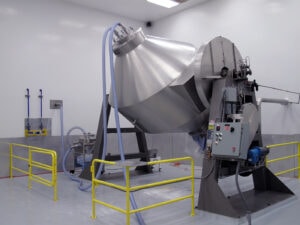
Specializing in the design and manufacture of pneumatic systems and support equipment for the conveying, weighing, and batching of dry materials, Vac-U-Max has a unique adaptation of vacuum transfer called direct charge blender loading, designed specifically for the direct charge loading of blenders, mixers, reactors, and any vessel capable of withstanding a vacuum.
With a facility’s blender or mixer as the primary receiver, VAC-U-MAX configures systems specific to each application, providing the power source, filters, controls and adapters.
Power options include vacuum pump packages from 3hp and higher as well as the company’s exclusive venturi power unit available in single to quadruple Venturi versions. Direct charge blender loading systems standardly convey up to 7000 pounds per hour and when they exceed that rate, systems are equipped with increased levels of automation.
“Our system is equipped with a bag dump station and a floor standing blender loader that captures carry-over,” says Muench.
The bag dump station is designed to handle 25-kilogram bags, pails, and cartons. Now, rather than two additional days of labor to transfer product from bags to fiber drums, an operator now slices the entire length of the bag, flips it over and dumps the powder into the station. From the station, powder flows by gravity to the vacuum pick-up point on the bottom of the bag dump station and discharges directly into the blender or formulator.
Vac-U-Max bag dump stations generally include an integral dust collector, however Package Kare chose to utilize its existing dust collector with ducting that connects to the back of the station.
Configuration Options: Floor Standing v Suspended Units
Because Vac-U-Max configures systems specific to each application, direct charge blender loading systems come with the option of either floor standing or suspended blender loaders that are designed to significantly reduce the amount of carry over, eliminating product loss.
The advantage of floor standing units is that they are readily accessible for cleaning and can be equipped with casters, allowing them service more than one blender. With floor standing units, once the blender is loaded and equalized, carry over releases into an airtight vessel that preserves product integrity allowing for reuse or safe disposal.
With suspended units, once the blender is loaded and equalized, material automatically discharges back into the blender eliminating the need to handle product manually.
Results & Feedback

“In our industry there is some concern about carry-over and the goal is to minimize the amount of product you handle manually. I believe the industry standard is about 10 percent carry over, but the Vac-U-Max system is extremely efficient,” says Muench.
“We have three or four main products that we run in our formulator, and after 2.5 hours of loading 2500 pounds we only have about one pound of carry over,” she says. “The most I have seen is two pounds and that is with another product line that we run with 6000 pounds of powder per batch.”
“Their filter systems are incredible. The vacuum pump has not seen an ounce of powder in it,” say Muench.
The minimal carry-over experienced by Package Kare is due in part to the large capacity of its equipment–the larger the blender, mixer or formulator, the less carry over is accumulated.
Sometimes the cost benefit of equipment goes beyond reduced labor, plant efficiency, and reduced material costs—extending to the ability to take on new and varied customers. This was the case for Package Kare, when a new client approached them with a material that appeared impossible to convey pneumatically.
“We would have had to turn a customer away if Vac-U-Max hadn’t found a way to get the finished product to work with the system,” says Muench.
The solution to get the clay-like material to convey into bulk bags included fitting a pick-up hopper into the space where fiber bins normally sat in the Gemcomatic. From the pick-up hopper—equipped with a free-flowing screw discharger designed to handle sticky powders—material is metered into the conveying line to a vacuum receiver, discharging into a bulk bag loading station and then releasing into a fresh bulk bag.
“They gave us something that would already fit our device. It was easy—just plug it in and go,” says Muench.
“We deal with a lot of difficult materials, and working with Vac-U-Max has allowed us to meet customer needs without having to modify our equipment,” she says. “When you start getting into equipment modifications, it means bigger and bigger dollars.”
Additional Benefits
In addition to eliminating retrofitting costs and reducing labor needed to accommodate the sacks and bulk bags, the company has also benefited from reduced labor costs associated with standard maintenance and cleaning because of the conveyor system’s simple design.
At the toll blending facility, there are three tiers of employees on the floor—helpers, operators and mechanics. “The operation of the conveying equipment is so simple, an operator level employee is not necessary. Our helpers set up and load or unload the equipment. The conveying system doesn’t need any tools to take it apart so there is no need for mechanics to operate this system,” says Muench.
To ensure the equipment is free of residual powder, equipment is taken apart and cleaned after every product. “We have different hoses for every product and that saves a lot of time. It only takes 30-45 minutes to wash down the equipment and change out the bags, filters and hoses,” she says.
Muench says, “the process has eliminated the 16-hour repack procedure, allowed us to accept all three standard means of carrying bulk material, and saved us cost and resources.”
The use of direct charge blender loading systems allows processors to adapt to industry changes by eliminating the need for conventional vacuum receivers, transferring all materials into the process without spills and waste, and keeping housekeeping to a minimum.
Image gallery
Aerocon Aero-Mechanical Convey System Handles Multiple Ingredients for the Paint Industry
Case Study
From Concept to Production: Engineering One Automated System for TiO2, Calcium Carbonate, Resin, Talc, and Clay
When a leading paint manufacturer from the Gulf Coast of the United States decided to consolidate and modernize their paint production facilities, it became obvious that the diverse handling characteristics of TiO2 (titanium dioxide), calcium carbonate, resin, talc, and clay would require a special approach to conveying. Each bulk material possessed different characteristics, each affected differently by conveying properties, with some bulk materials consisting of lumps ’the size of a basketball.’ Each ingredient in the process was delivered in a 2000 lb (910 kg) bulk bag, requiring the bag to be offloaded and transferred to one of ten Hockmeyer Mixers.
Process Challenges: Multiple Recipes, Ingredients, and Bulk Densities
In order to accommodate a large number of variable recipes for paint production, including the addition of minor colorants and additives, a site visit was arranged to discuss the best system design and equipment specification to automate the process. Key issues at hand were the difficulty of breaking down the large lumps, as well as finding the best way to handle TiO2. A lump breaker system could be used as a particle size reducer but presented a problem for the difficult flow properties of TiO2.
Upon further site review, a total of four bulk bag unloading and transfer systems were needed, with a required unloading time of just 5 minutes for each 2000 pound bag of TiO2. Additionally, the application required a very minimal delay in loading the mixer as multiple bulk bags were changed, furthering the requirement to avoid wasted time when changing bags. Furthermore, given that the entire system operated in an Explosion Hazard area, engineering challenges for the conveyor system were significant.
Application Solution
Aerocon Aero-mechanical conveyors are well-suited for the transfer of a variety of products at the same transfer velocity. Unlike pneumatic systems, Aero-mechanical conveyors can accommodate a wide variety of product bulk densities without the need to change conveying parameters. Additionally, the conveyor does not pump air and therefore requires no filtration.
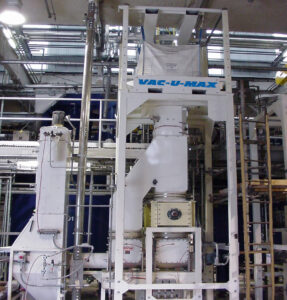
The designed system consists of an Aerocon bag dump station, a unique twin hopper screw feeder, purpose-built gravity diverter valve, a split-frame type bulk bag unloader, a lump breaker, and two Aero-mechanical conveyors. The bulk bag assembly was over 20 feet high to accommodate the diverter valve. Bulk material was unloaded from bulk bags, with minor ingredients hand dumped via integrated reverse jet filter type bag dump station, fed via a screw feeder and on to the first of two Aero-mechanical conveyors.
Features
- Conveys TiO2, talc, clay, and resins in the same conveyor
- Split frame bulk bag unloader minimizes the bag changeover time by allowing a second frame to be staged ready for loading
- Able to handle ingredients with lumps as large as a basketball
- Empties 2000 pounds of titanium dioxide in five minutes
Low Headroom, No Problem
The 450V Aero-mechanical conveyor elevates bulk materials 20’ before turning through 90 degrees and running horizontally for 12’ where bulk material discharges into a second Aero-Mechanical unit. Running at a lower linear velocity, this mechanical conveyor is equipped with three-outlet valves. The low profile Rotating Tube Section Valves are pneumatically operated and allow the selection of the appropriate destination mixer. The overall height of each valve is 15” including the operator, which in comparison to the height of a typical filter receiver, allows greater flexibility for low headroom environments.
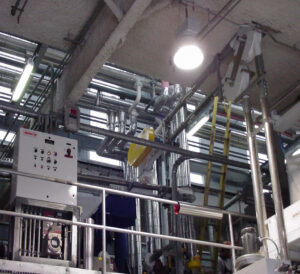
For products such as TiO2 that smear inside conveyor tubes, the Aero-mechanical conveyor has a unique ability to keep the bore of the tube clean because of the method of conveying generated by the cable and disc assembly.
Also essential to the success of this particular application was the design of the control panel. VAC-U-MAX is a UL approved panel manufacturer. Using a Micro Logic programmable controller housed within a ’Z’ Purged standard enclosure, one panel incorporated controls for the motors, reverse jet filter, lump breaker, and screw feeder. Additionally, the selection of the appropriate mixer and isolation valves were made. The ’Z’ purge enclosure uses positive pressure within the panel to protect against explosion risk.
Aerocon: Features, Benefits, and Other Applications
An Aerocon Aero-mechanical Conveyor is constructed of two parallel tubular housings (typically 3” or 4” tubes) containing a continuous loop of steel cable. Polymer discs smaller than the inside diameter of the tubes are mounted at equal intervals along the steel cable. One side of the housing is for conveying and the other is for return. Material inlets and outlets are suitably located for the application. Two sprocket assemblies, one providing drive and linked to a small motor (Typically 2 or 3 hp) and the other guiding the return, complete a basic system.
Aerocon Conveyors have major advantages over competitive units by virtue of a superior bi-directional tensioning system that is independent of the drive assembly, offering easy clean self-draining housings, with geared motors as standard. Additionally, Aero-Conveyors are more economical to run, saving on overall energy costs.
The Aerocon Aero-mechanical Conveyor is ideal for applications requiring the loading of powders, granules, beans, tea, and other friable bulk ingredients from paper sacks, bulk bags, blenders, and bag dump stations, including transferring bulk ingredients to packaging lines. Bulk ingredients are conveyed cleanly without segregation, and gently, to avoid product degradation. Application is dust-free and can accommodate floor level loading.